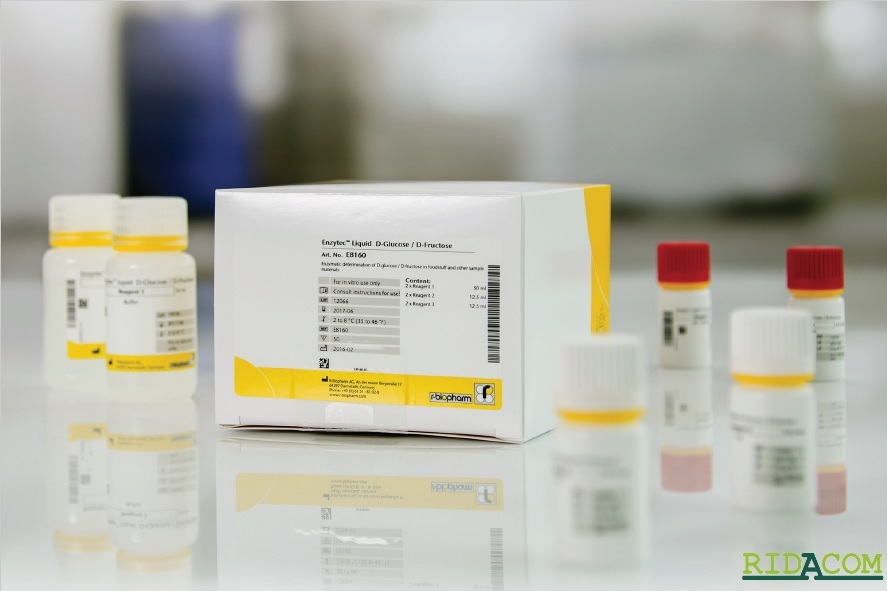
Ammonia is an enzymatic test for the determination of ammonia in foodstuffs and other materials and for the determination of nitrogen after Kjeldahl-digestion, through an UV method.
For in vitro use only.
General Information:
Ammonia is present in the environment as a result of natural processes from the nitrogen cycle, but also from industrial activity including intensive farming. High concentrations of ammonia can indicate the (microbial) decomposition of substances like milk, meat and seafood, where it is a major component of the off-flavors and odors associated with spoilage. Ammonia also indicates the presence of feces, urine and microorganisms in water. On the positive side, ammonia is an important source of nitrogen for many microorganisms in fermentation processes like winemaking. Ammonium salts produced on a large scale are used for the production of fertilizers, animal feed, paper, and in the case of food as leavening agents, stabilizers, and for flavoring purposes.
Test Format: Test combination for approx. 50 determinations
Wavelength: 340 nm
Temperature: 20-25 °C
Sample Solution: 0.2-8 μg ammonia per assay (in 0.100-2.000 mL sample volume)