General information about the test:
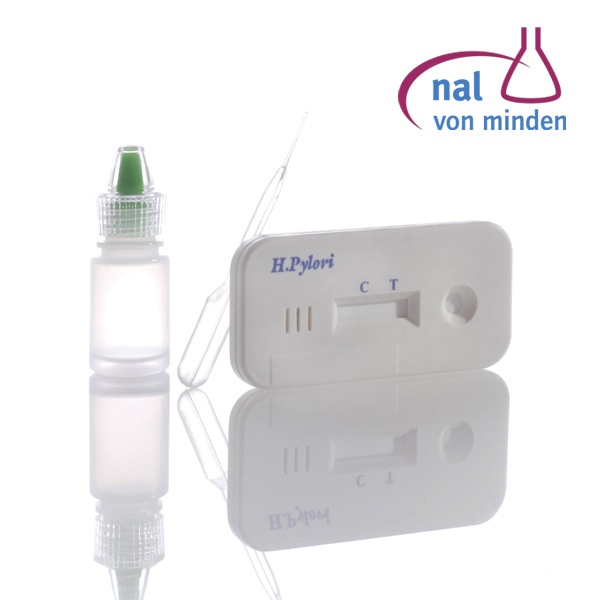
NADAL® C. difficile Toxin A/B+GDHis a combined immunological test for detection of both Toxin A and B and GDH antigens in human faeces samples. This test aids diagnosis of Clostridium difficile infection and is designed for professional use only.
Reagents and materials supplied:
- 10 NADAL® C. difficile Toxin A/B+GDH test cassettes
- 10 disposable plastic pipettes (for liquid faecal samples)
- 10 specimen collection tubes with buffer (2 mL)
- 1 package insert
Test time: 10 min
Performance characteristics:
- GDH
Analytical sensitivity of NADAL® C. difficile Toxin A/B+GDH to GDH is determined using commercially available purified GDH antigen. The lower detection limit of the test for GDH is 5 ng/mL. A competitor tests shows lower detection limit 10 ng/mL.
Diagnostic sensitivity and specificity for GDH was assessed by comparison between the results for 59 human faeces samples obtained by NADAL® C. difficile Toxin A/B+GDH and DiaSorin.
Sensitivity: 81% (13/16)
Specificity: 97.5% (39/40)
Overall agreement: 93% (52/56)
As far as GDH is concerned, NADAL® C. difficile Toxin A/B+GDH does not show any cross-reactivity with the following microorganisms: Campylobacter spp., E. coli, H. pylori, L. monocytogenes, Salmonella spp., Shigella spp., S. aureus, Y. enterocolitica, C difficile Toxin А and B, Rotavirus and Adenovirus.
- Toxin A
Analytical sensitivity of NADAL® C. difficile Toxin A/B+GDH to Toxin A is determined using commercially available purified Toxin A antigen. The lower detection limit of the test for Toxin A is 4 ng/mL.
Diagnostic sensitivity and specificity for Antigen A was determined by comparison with the results for 63 human faeces samples observed by cytotoxicity and cell culturing methods and NADAL® C. difficile Toxin A/B+GDH
Sensitivity: 86.7% (13/15)
Specificity: 91.7% (44/48)
- Toxin B
Analytical sensitivity of NADAL® C. difficile Toxin A/B+GDH to Toxin B is determined using commercially available purified Toxin B antigen. The lower detection limit of the test for Toxin B is 5 ng/mL.
Up to 500 ng/mL NADAL® C. difficile Toxin A/B+GDH shows no cross-reactivity between Toxin A and Toxin B
Test principles:
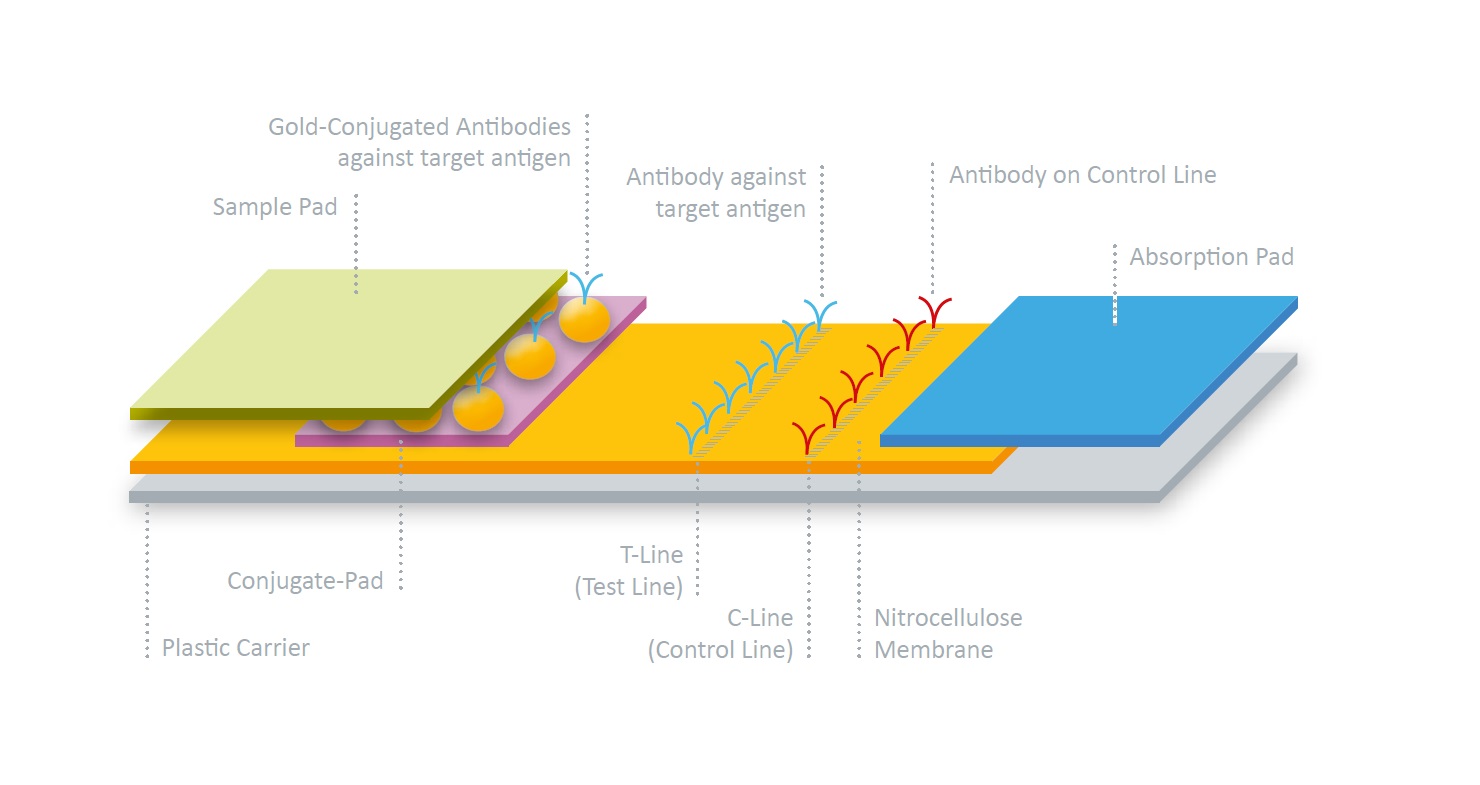
The NADAL® C. difficile Toxin A/B+GDH is a combined rapid immunological test for qualitative detection of Toxins A and B and glutamate dehydrogenase (GDH) of C. difficile. The test cassette is composed of three test strips for detection of Toxin A, Toxin B and GDH respectively. The test principle involves specific monoclonal antibodies conjugated to colloidal gold particles and specific anti-Toxin A, anti-Toxin B and anti-GDH. In case of presence of some of these antigens in a faecal sample, pink-rose coloration appear in the respective test (T) line of the test cassette. A pink-rose line should always appear in the control line region (C) which serves as a procedural control, indicating that the proper volume of specimen has been added and membrane wicking has occurred.
Clinical significance:
Clostridium difficile is anaerobic gram-positive spore-forming bacterium – a feature that enables it to persist in patients and physical environments for long periods of time. Infection with C. difficile takes place by fecal-oral route. C. difficileis the main pathogen related to cases of antibiotics associated diarrhea and/or pseudomembranous colitis in hospitalized patients. Colonic microflora of a healthy adult is resistant to C. difficile infection. When the normal colonic flora is compromised resistance to C. difficile is lost. Such conditions might occur after treatment with broad-spectrum antibiotics such as penicillins, cephalosporins and clindamycin.
C. difficile releases two high-molecular-weight toxins – A and B. They cause the clinical manifestations of C. difficile infection – ranging from mild self-limited watery diarrhea to fulminant pseudomembranous colitis, toxic megacolon and death.