The female microbiota is a delicate and dynamic ecosystem, whose balance can be influenced by numerous factors (age, pregnancy, hormonal status, previous therapies, and others). The vaginal microbiome plays a key role in women’s health, making its precise assessment an essential component of modern gynecological and reproductive care. Accumulating evidence indicates that vaginal dysbiosis is an important factor in a wide range of gynecological and reproductive disorders, underscoring the need for precise and comprehensive diagnostic tools.
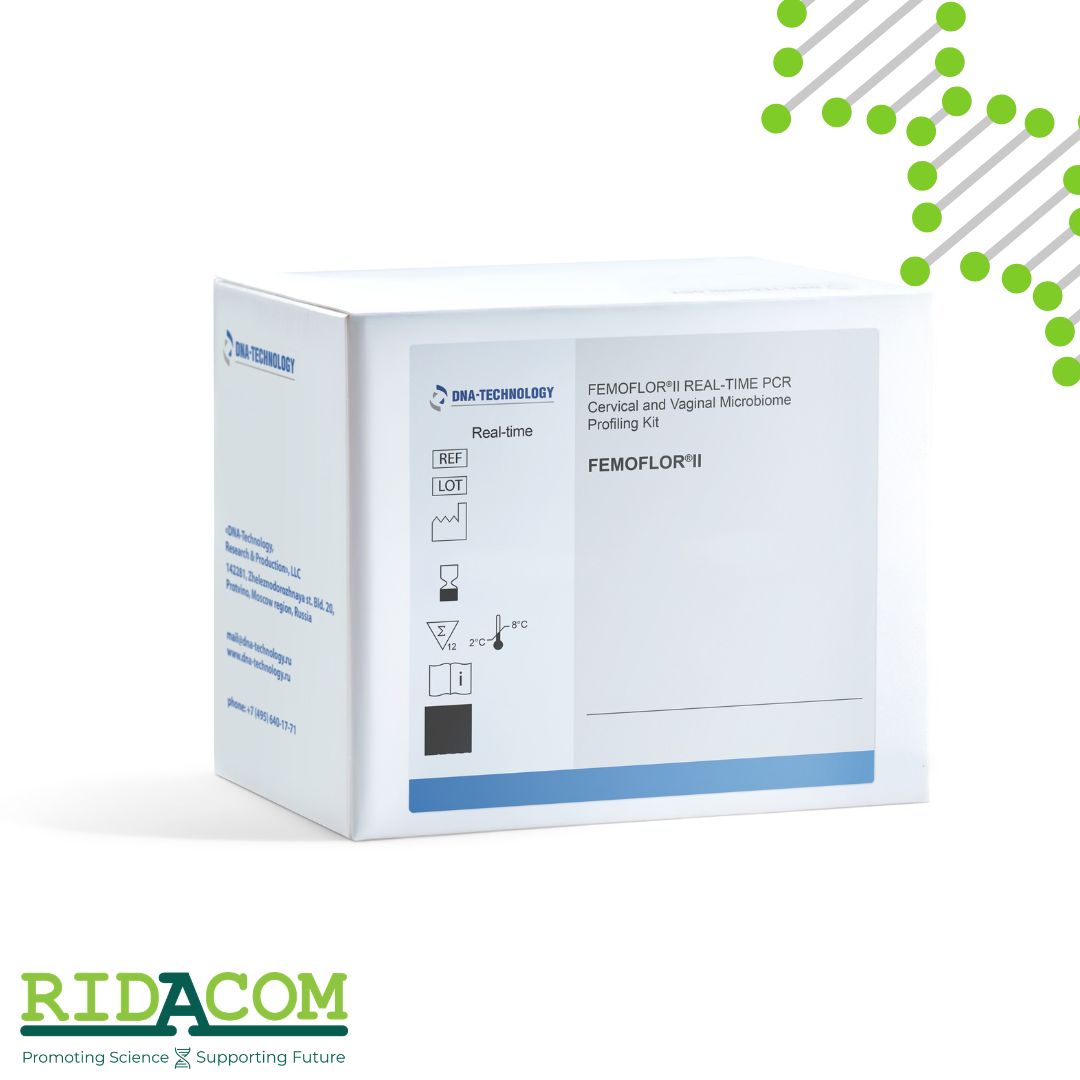
FEMOFLOR® II Real-Time PCR Cervical and Vaginal Microbiome Profiling Kit is a highly specialized, quantitative molecular panel of the next generation, designed for comprehensive, quantitative, and qualitative assessment of the microbiota of the female reproductive tract. The method enables simultaneous qualitative and quantitative detection of a broad spectrum of microorganisms, including normal, opportunistic, and pathogenic microflora:
- Representatives of the normal microflora (Lactobacillus spp.; Lactobacillus iners; Lactobacillus crispatus; Lactobacillus jensenii / Lactobacillus mulieris; Lactobacillus gasseri / Lactobacillus paragasseri; Bifidobacterium spp.)
- Facultative anaerobes (Staphylococcus spp.; Streptococcus spp.; Streptococcus agalactiae; Enterobacteriaceae; Enterococcus spp.; Haemophilus spp.)
- Obligate anaerobes (Gardnerella vaginalis; Fannyhessea vaginae; Mobiluncus spp.; Anaerococcus spp.; Peptostreptococcus spp.; Bacteroides spp. / Porphyromonas spp. / Prevotella spp.; Sneathia spp. / Leptotrichia spp. / Fusobacterium spp.; Megasphaera spp. / Veillonella spp. / Dialister spp.; BVAB1 / BVAB2 / BVAB3)
- Mycoplasmas and ureaplasmas (Mycoplasma hominis; Ureaplasma urealyticum; Ureaplasma parvum)
- Yeasts of the genus Candida (Candida spp.; Candida albicans)
- Sexually transmitted pathogenic microorganisms (Chlamydia trachomatis; Neisseria gonorrhoeae; Mycoplasma genitalium; Trichomonas vaginalis)
- Herpes viruses (HSV-1, HSV-2, and Cytomegalovirus (CMV))
- 14 high-risk HPV genotypes (HPV 16, HPV 18, HPV 45, HPV 31 / 33 / 35 / 39 / 51 / 52 / 56 / 58 / 59 / 66 / 68), with differentiation of the highest oncogenic risk genotypes: HPV 16, HPV 18, and HPV 45.
CHARACTERISTICS AND ADVANTAGES OF THE METHOD:
- Assessment of the microbiome status by determining the ratio between the quantity of lactobacillus and the total bacterial load in the sample.
- Comparison of the amount of opportunistic biota with the amount of lactobacillus allows determining etiologic significance of various microorganisms in developing dysbiosis as well as the degree of its manifestation.
- Functional profiling of Lactobacillus spp. – differentiation of key species (Lactobacillus iners, Lactobacillus crispatus, Lactobacillus jensenii / Lactobacillus mulieris, and Lactobacillus gasseri / Lactobacillus paragasseri) to assess the protective potential and functional relevance of the vaginal microbiome.
- Quantitative determination of Group B Streptococcus – particularly important in pregnancy planning and during pregnancy.
- Pre-analytical quality control via the SIC (Sample Intake Control) parameter, which verifies the amount of collected material, ensuring high analytical quality, reliable interpretation, and confidence in the diagnostic result.
- Possibility for targeted and specific therapy based on identified pathogens, as well as monitoring of treatment effectiveness over time.
VALIDATED SAMPLE TYPES FOR ANALYSIS:
- Epithelial swab from the mucous membrane of cervical canal and vagina, and others.
- The method is also validated for diagnostic material from liquid-based cytology, as well as for samples collected using self-sampling kits.
KIT CONTENT:
- Preloaded ready to use PCR mix - 24 x 8-PCR strips
- Taq-polymerase - 2 x 1.0 mL
- Mineral oil - 4 x 1.0 mL
- Positive control - 320 μL
Storage: from 2°С to 8°С
Expiration date: 12 months