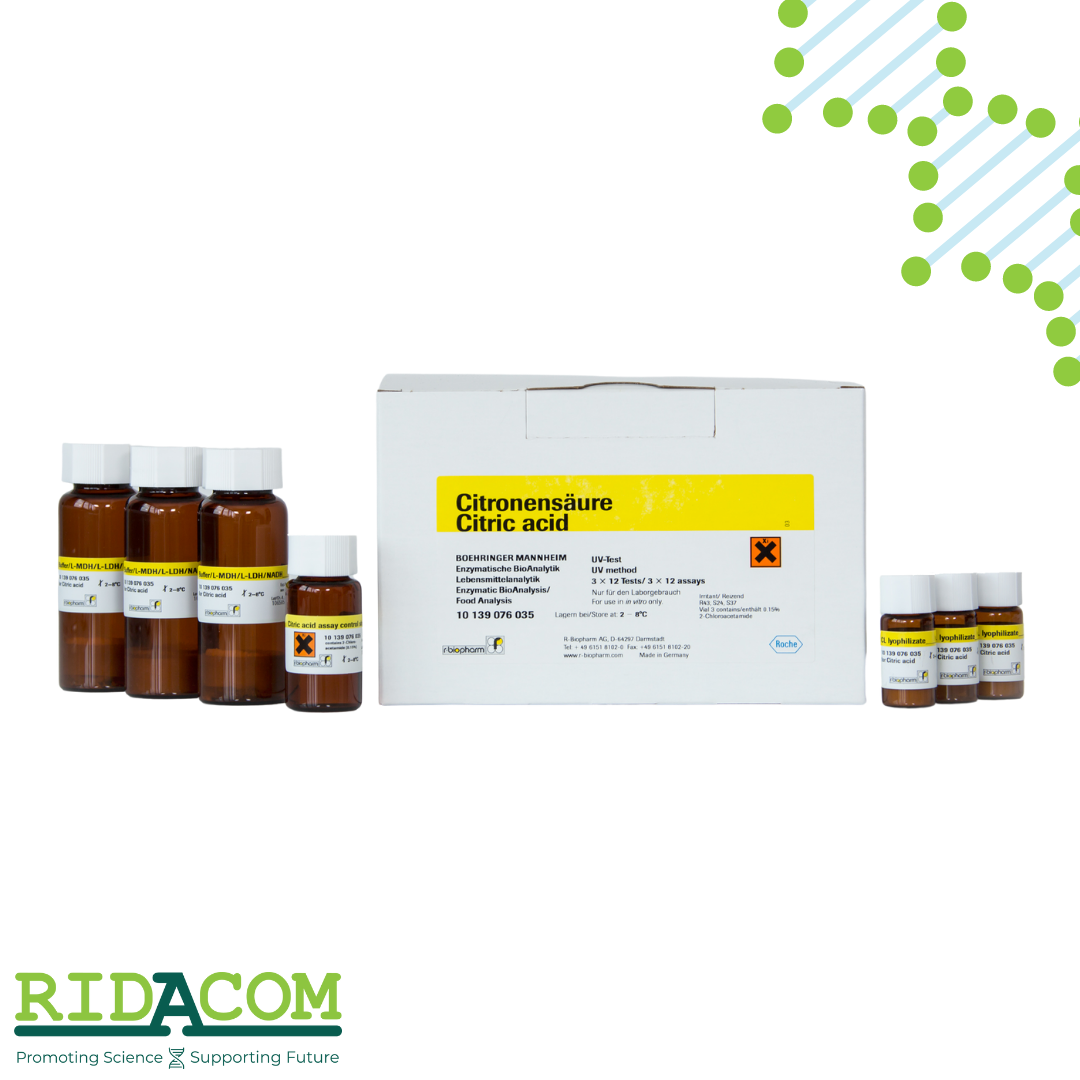
Formic Acid is an enzymatic test for the determination of formic acid in foodstuffs and other materials through an UV method.
For in vitro use only.
General Information:
Formic acid occurs as a metabolite in many biochemical reactions, but its concentration is invariably very low. It is the oxidation product of methanol and formaldehyde. As formic acid in low concentrations has both a bactericidal and fungicidal effect, it can be used as a food preservative. Molds tend to produce formic acid as a metabolite; hence, determination of formic acid can give an indication as to the properties, e. g. the degree of decomposition, of samples. Formic acid belongs to the dangerous substances in the production of yeast. Formic acid is a side product in acetic acid fermentation in vinegar production, and is also a part of the “volatile acids” in wine.
Test Format: Test combination for 21 determinations
Wavelength: 340 nm
Temperature: 20-25 °C
Sample Solution: 0.4-20 μg formic acid per assay (in 0.100-2.000 mL sample volume)
LOD (Detection limit): 0.2 mg / L